


The story that nobody heard
A hotel group we work with had spent the best part of twelve months developing a strong provenance story around its food. Where ingredients came from, the local suppliers behind the menu and the long-standing relationships that supported it.
It was a story worth telling – it demonstrated quality, supported premium pricing and gave guests another reason to value the experience.
It was being communicated properly. Through social media, pre-arrival emails and website content, the message was consistent and visible across the customer journey.
But when the guest survey results came back, awareness was surprisingly low. Very few guests referenced it and a significant number had no awareness of the provenance story at all.
The obvious conclusion would have been that the message or creative wasn’t working.
As it turned out neither was the problem – the issue was the timing as to when guests were being asked to care about it.
The right message at the wrong time
Three weeks before a hotel stay, a guest is thinking about the practicalities. Travel, check-in, what to pack, whether to book dinner or perhaps a treatment.
The provenance of the beef on the restaurant menu is unlikely to be particularly relevant at that point.
The same applies to a pre-arrival email. Guests may read the information, but it is competing with practical details that matter more to them at that particular stage.
Move that same information to the restaurant and the context changes completely. A guest sitting at a table with the menu in front of them is actively making a decision. Knowing that the beef comes from a farm twenty minutes away, or that the fish is sourced from a supplier the hotel has worked with for eight years, suddenly has relevance.
So we redesigned the menus. There was no major creative overhaul. We restructured the content and placed the provenance information alongside the dishes it related to, making it part of the decision rather than something guests were expected to remember from an earlier interaction.
Within three months, average spend per head increased by 27%.
So what actually changed?
The product didn’t change. The suppliers didn’t change. The story didn’t change. Much of the wording didn’t change either. What changed was the point at which the customer encountered it.
That distinction is important because marketing strategy often concentrates heavily on message and channel. What are we saying? Where are we saying it? Which platforms should we be using?
There is a third question that matters just as much:
When is the customer most receptive to hearing it?
A strong message delivered at the wrong point in the customer journey can be surprisingly ineffective.
Applying it to your own marketing
Look at the messages you are currently putting in front of customers and consider where they sit in the customer journey.
When does that information become relevant?
When could it genuinely influence a decision?
And are you communicating it at that point, or simply using the channels that are easiest and most obvious?
For a retailer, ethical sourcing information may have greater value when a customer is comparing products than during an initial awareness campaign.
For a professional services business, credentials and case studies may become more important once a prospect is actively considering who to work with.
For a hotel, information about upgrades, treatments or dining can become considerably more powerful when it appears at the point those decisions are being made.
This isn’t an argument against awareness marketing. It is about recognising that different messages have different roles throughout the customer journey.
A simple test
Take your current emails, social content, advertising and customer communications and ask yourself:
What is the customer doing when they receive this message?
If the answer suggests they have little reason to care about it at that point, the problem may not be the content at all.
It may simply be in the wrong place at the wrong time.
And sometimes, moving the message is far more effective than rewriting it.
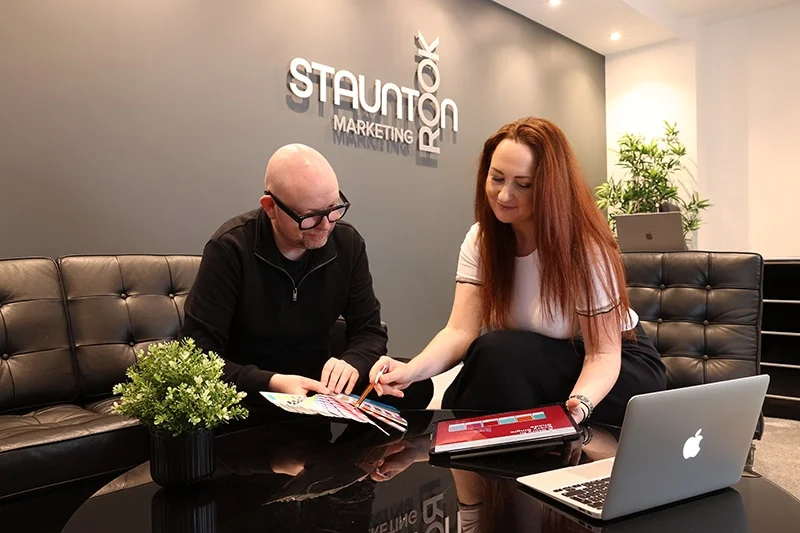
Staunton Rook is a full-service marketing agency based in Chester, working with hospitality businesses, professional services firms and consumer brands across the UK.