


If you have searched how much to charge for annual report design or you are trying to budget for one as a business, you have probably noticed there is no straight answer sitting on Google. That is because an annual report is not a standard product. It changes shape depending on the size of the company or how much data needs presenting and whether it needs to meet formal reporting standards.
This guide walks through what shapes the cost of an annual report and what tends to be included and also how to judge whether a quote reflects the scope properly.
Why Annual Report Pricing Varies So Much

An annual report for a small private company looks nothing like one for a listed PLC with shareholders across several countries. Cost increases are a logical result of scaling complexity, which affects everything from initial design concepts through to the final production and proofing stages.
A few things that shift the cost up or down:
- The number of pages and how data-heavy the content is
- Whether the report needs to be print ready, digital only or both
- Regulatory requirements, including Companies House and XBRL formats for HMRC
- How many rounds of amends and proofing are built into the timeline
- Whether copywriting, illustration or infographics are needed alongside layout
Because these variables shift from one business to the next, agencies rarely publish a flat rate. A single number would be misleading more often than it would be helpful.
What Other UK Sources Say About Cost
Industry pricing data is limited since so few agencies publish rates, but a small amount of public information exists. UK design agency Alliance Agency places annual and impact report design somewhere in the region of £950 to £5,000 and upwards, with the final figure shaped by page count, the use of custom infographics and charts and how much precise formatting the content needs. Their guide also notes that more heavily illustrated or data-driven reports tend to sit at the higher end of that scale.
This lines up with what has been covered above. A short, text-led report for a smaller business sits well below a fully illustrated report for a listed PLC with print and digital versions running side by side. Figures like these are useful as a general reference point, but they should not be treated as a fixed quote for any specific project, since scope is really what drives the final number.
How Report Length Truly Affects Price
Page count gets treated as a simple multiplier, but it rarely works that way in practice. A twelve page report is not half the cost of a twenty four page one, since certain costs stay fixed regardless of length.
- Concept development and brand direction get set once, not per page, so a longer report does not double this cost
- Data-heavy pages such as financial statements take longer to typeset accurately than a page of narrative text
- Cover design, contents pages and section dividers add design time without adding much length
- More pages usually means more proofing rounds, since there is simply more to check for errors
This is one reason two reports of similar length can still land on different prices. A twenty page report packed with tables and charts takes longer to produce properly than a twenty page report built mostly around photography and short sections of copy.
What Usually Goes Into the Process
Annual report design is rarely just about layout. There are several stages that sit behind the final document and each one adds time and cost depending on how involved it needs to be.
- Research and briefing, understanding the company, its stakeholders and the messages that need to come through
- Concept design, developing a visual direction that fits the brand and the tone of the report
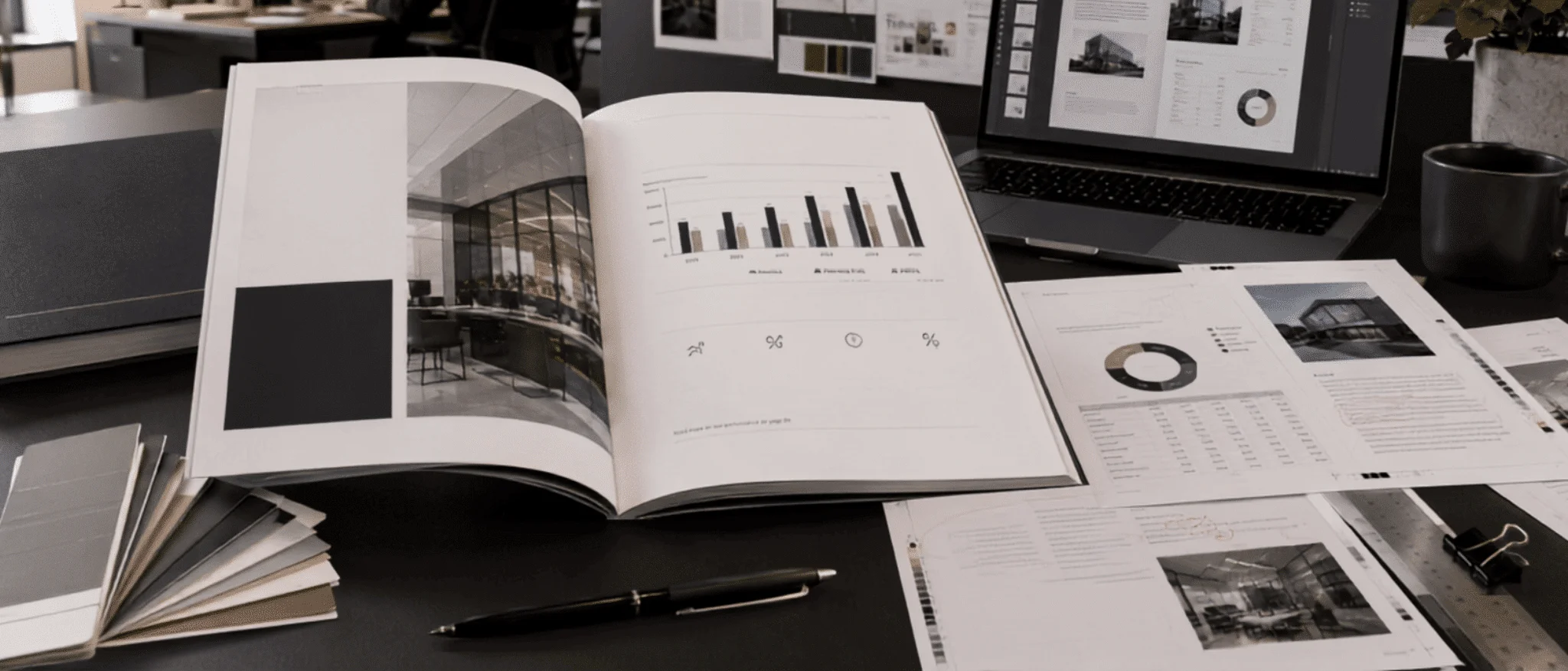
- Typesetting and data visualisation, turning financial and performance data into something readable rather than a wall of text
- Proofreading and quality control, often across multiple rounds since accuracy matters more here than almost any other document a business produces
- Production and print management, including press checks if a physical copy is being distributed
- Delivery, whether that is mailing shareholders directly or publishing a digital version
Skipping steps to save money at the start, particularly proofing, tends to cost more later if errors slip into a printed and mailed document.
Why Accuracy Pushes the Cost Up
Annual reports carry more risk than most marketing materials. A typo in a brochure is embarrassing. A mistake in a financial statement or a shareholder communication can create real problems, including compliance issues.
This is why proper agencies build in structured proofing stages rather than a single once-over and why turnaround speed on amends matters just as much as the design itself. Fast, accurate proofing at every stage keeps a tight reporting deadline from turning into a scramble at the end.
What Drives Up the Cost Without People Realising
A few cost drivers get missed at the briefing stage and only show up once work is underway.
- Late content from finance teams, which pushes design work into a tighter window and often means paying for weekend or overnight turnaround
- Photography that needs commissioning rather than pulled from an existing library, since staff and site shoots add both time and a separate cost line
- Translation for reports going to shareholders in more than one country, which affects layout as well as the text itself
- Print finishes such as spot varnish, embossing or a hardback cover, which cost more than a standard printed and bound copy
- A rebrand landing mid-project, which means reworking a report that was already partway through design
None of these are wrong to want. They just tend to get left out of an early conversation about scope, then surface as an unexpected addition once the invoice comes through.
In-House Design Versus an Outsourced Agency
Some larger businesses have an in-house design or communications team capable of producing an annual report internally. It can work, but it usually means pulling that team away from other ongoing work for several weeks, sometimes longer depending on the reporting deadline.
Outsourcing to a specialist agency means the report is handled by a team that already has a system in place for tight proofing rounds, data-heavy layouts and press management, without disrupting day to day marketing activity elsewhere in the business. For businesses producing a report annually rather than every quarter, this is often the more practical route, since it avoids building and maintaining specialist skills in-house for a task that only comes round once a year.
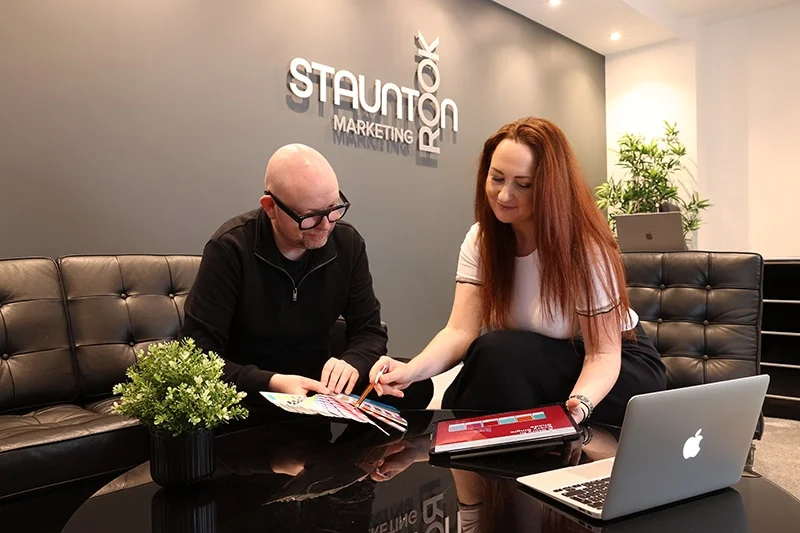
Staunton Rook has handled annual report design for listed businesses for more than two decades, including long running projects with the same clients year after year.
Questions Worth Asking Before You Commit to an Agency
- How many rounds of proofing and amends are included before extra charges apply?
- What is the typical turnaround time between submitting a change and seeing it actioned?
- Can the agency deliver Companies House compatible and XBRL formats if required?
- Is print management and delivery to shareholders included or handled separately?
- What confidentiality measures are in place given the sensitivity of financial data?
Getting clear answers to these before signing anything tells you a lot about how smoothly the project is likely to run once the real deadline pressure hits.
Practical Signs of a Trustworthy Design Partner
- A clear proofing and quality control process rather than a vague promise of accuracy
- Experience working with PLCs or regulated businesses, not just general marketing collateral
- Willingness to sign a confidentiality agreement given the sensitivity of financial data
- Case studies or long-standing client relationships in report design specifically
- A dedicated account manager rather than a rotating point of contact
If you want a sense of what working with a design and marketing partner looks like once a project is underway, it is worth reading through working with a marketing agency before requesting quotes.
Why the Cheapest Quote Is Not Always the Safer Option
Choosing on price alone can create problems later, particularly with a document this sensitive.
- A low quote may not include enough proofing rounds, which raises the risk of an error reaching a printed and mailed report
- Cheaper providers sometimes outsource typesetting or data visualisation, adding a layer that slows down amends
- Some quotes exclude project management, leaving the business to coordinate between writers, designers and printers directly
- A lower price with a longer turnaround can create real pressure if a statutory filing deadline is fixed and cannot move
A quote sitting well below others is worth a direct question about what has been left out, rather than treated as simply good value.
Budgeting Sensibly for a Report
Rather than chasing one fixed figure, it helps to think about the report in terms of scope. A short, digital-only report for a smaller private company involves far less than a lengthy printed report for a PLC with shareholder mailings, infographics and full data visualisation. Get clear on which of these applies to your business before asking for pricing, since it changes the shape of every quote you receive.
If your business is also weighing up wider design needs alongside the report itself, it can help to look at related services such as brochure design or brand design, particularly if your annual report needs to align visually with other printed materials going out around the same time.
Final Thoughts
There is no single figure that answers how much annual report design costs, since the scope, format and regulatory requirements all shape the final quote differently for every business. What matters most is understanding the process involved and choosing a team that can handle accuracy and deadlines without cutting corners.
Staunton Rook has designed and delivered annual reports for PLCs and private businesses for over two decades, managing everything from concept through to print and shareholder delivery. To talk through what your next report might involve, get in touch here or take a look at the full annual report design service to see how the process works from start to finish.
FAQs
Why do design agencies avoid quoting a fixed price upfront?
Because scope varies so much between reports that a flat number would rarely reflect the actual project accurately.
Is it cheaper to use a freelancer instead of an agency?
Sometimes, though a freelancer may lack the proofing systems and production support a regulated report typically needs.
How many proofing rounds are normal for this type of project?
It varies by agency, but multiple structured rounds are standard given how much is at stake if an error is missed.
What happens if changes come in close to the shareholder mailing date?
A good agency will have a clear process for fast turnaround amends without compromising accuracy under time pressure.
Do smaller private companies need the same level of design as a PLC?
Not necessarily, smaller businesses often need a simpler, shorter report without the full regulatory formatting a PLC requires.