


There’s a version of this article that opens with a breathless declaration about how everything has changed and nothing will ever be the same. You’ve read that one already, probably several times, from several different agencies. This isn’t that.
What Google and Meta have done to their ad platforms over the past twelve to eighteen months is genuinely significant, but the significance isn’t in the technology itself. It’s in where the value now sits for the businesses running campaigns. That’s a more practical question, and it’s the one worth answering.
What’s actually changed on Google
Google’s Performance Max campaigns have been around for a few years, but the 2024 and 2025 updates introduced something that actually shifts how the platform works: AI Max. At its simplest, it means Google is now doing far more of the decision-making itself: not just where to show your ads, but how to write them, which landing page to send traffic to, which signals to prioritise across Search, Shopping, Display and YouTube simultaneously.
The platform-reported numbers suggest accounts running AI Max with the full feature set switched on see around 7% more conversions at a similar cost per acquisition compared to campaigns without it. That figure comes from Google’s own data across a large number of accounts, so it smooths over a lot of variation. Some accounts will see far more, some less. But the direction is clear enough.
What it means practically is that the old levers (granular keyword lists, tightly defined ad groups, manual bid adjustments) matter less than they used to. They haven’t disappeared entirely, and there are still situations where more traditional campaign structures outperform. But the balance has shifted. The inputs that move the needle now are the quality of your creative assets, the clarity of your conversion signals and whether the person managing the account knows how to steer the AI in the right direction rather than fight it.
Campaigns left untouched for twelve months aren’t just missing new features. They’re missing the way the platform now fundamentally decides how to spend budget.
What’s changed on Meta
Meta’s shift has followed a similar logic through Advantage+. The Shopping Campaigns product has been the headline, but the same AI-driven automation has moved across the full suite: Instagram, Facebook, Reels, Audience Network.
The core change is in targeting. For years the conventional wisdom was that a well-defined custom audience, built from your own data and lookalike modelling, would outperform broad targeting. Meta’s AI has now reached a point where, in many cases, that’s no longer true. The platform has seen enough signals across billions of users that it can find your buyers better than a manually built audience can, particularly for campaigns with clear purchase or lead signals to optimise toward.
Accounts running Meta’s Advantage+ campaigns are reporting average ROAS lifts of around 22% compared to standard campaigns. Again, platform data, averaged across a large base. Your results will vary. But 22% is not a rounding error.
The practical implication is that the old skill of building and managing audiences is worth less than it was. What matters more now is the creative (the images, the video, the copy) and how well you’re feeding the algorithm the right signals from what’s happening further down your funnel.
A result worth knowing about
We’re not going to pretend the following is typical, because it isn’t. But it illustrates what a properly run campaign can produce when these tools are pointed in the right direction.
A campaign we managed recently cost the client £14,500 in ad spend. Over the following weeks it generated over £630,000 in new sales, tracked directly back to the campaign through to closed business.
That’s a specific client, a specific sector, a specific moment in market. It won’t repeat itself identically anywhere else. But the underlying structure (AI-era targeting, strong creative assets, clear conversion tracking, active management throughout) is repeatable. The result is an outlier. The approach isn’t.
So what does this mean for your business?
If your last paid campaign ran more than a year ago, it was built on a platform that no longer quite exists. The tools your agency or in-house team were using have changed underneath them, and a campaign structure that was solid in 2023 may now be actively working against you.
The businesses getting the most out of paid advertising right now share a few things: someone actively managing the campaign rather than leaving it to run, fresh creative fed in regularly rather than the same assets month after month, and proper conversion tracking so the AI is optimising toward actual outcomes rather than clicks.
None of that is especially complicated. But it does require someone who’s paying attention.
If you want to understand what your campaigns should look like now, whether you’re currently running ads or not, we’re happy to take a look. It usually only takes a conversation.
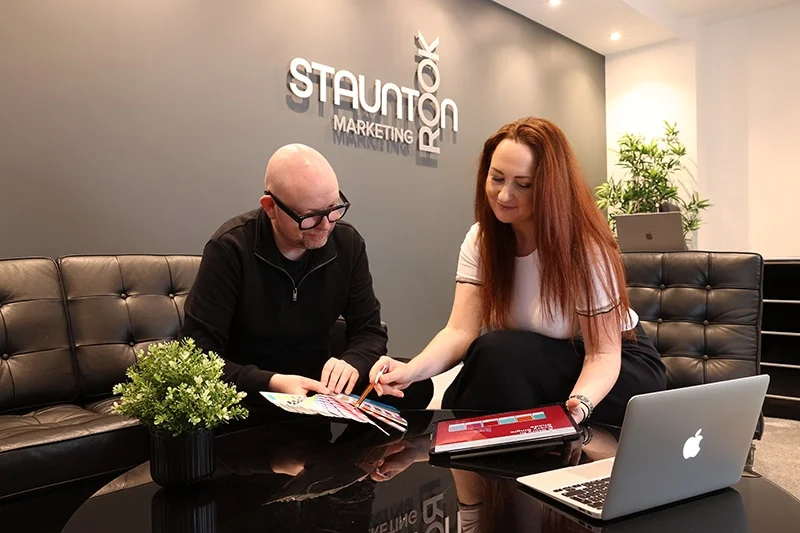
Staunton Rook is a full-service digital marketing agency based in Chester. We manage paid advertising across Google and Meta for clients across the UK.